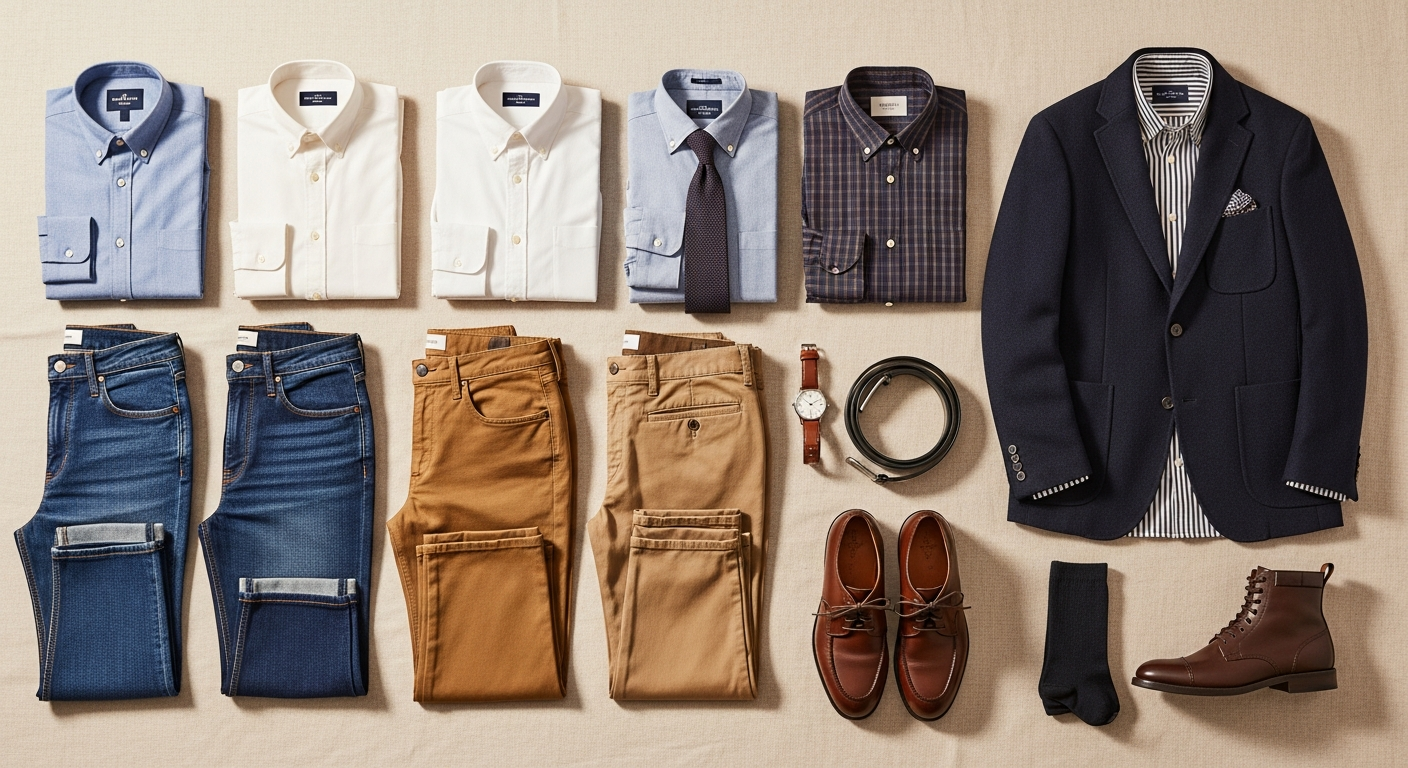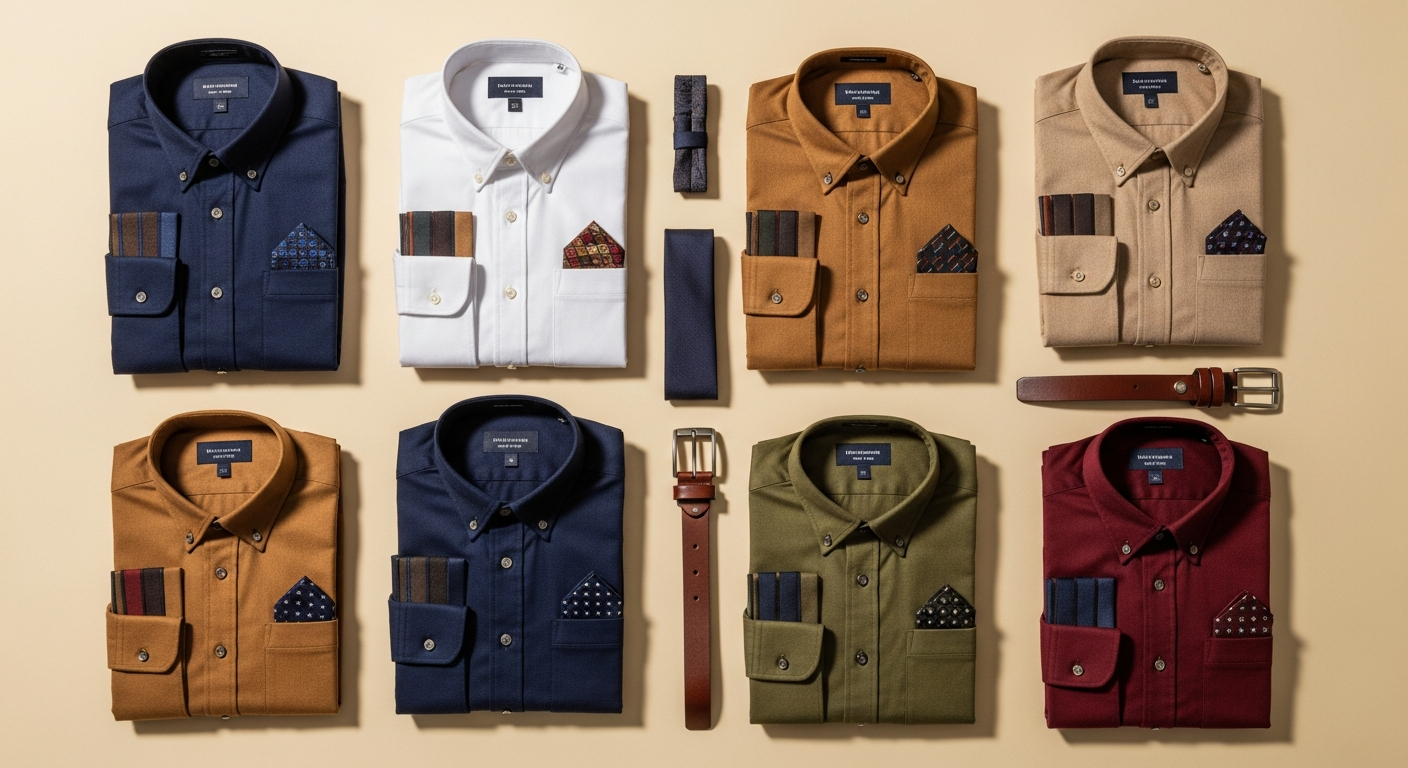
Nobody teaches men how to match colors. You're just supposed to figure it out. Maybe from watching your dad get dressed. Maybe from trial and error in a fitting room while your girlfriend gives thumbs up or down from outside the door.
So here's the guide you should have gotten years ago. No color wheel. No theory. Just rules that work.
Color matching is one of the first things Grayne handles for you automatically. But if you want to understand the logic, keep reading.
The Five Neutrals (Start Here)
These five colors go with almost everything, including each other:
- Navy
- White
- Grey (light to charcoal)
- Black
- Khaki/Tan
- Base your wardrobe on neutrals. Navy, grey, white, and khaki should make up about 70% of your closet.
- Add 2-3 "accent" colors you like. Burgundy, olive, and light blue are safe bets. These are the pieces that make your outfits interesting.
- Before buying a new color, check it against what you own. Can you pair it with at least 3 things already in your closet? If not, skip it.
If your entire wardrobe was only these five colors, you'd never have a bad outfit. That's not exciting, but it's true. When in doubt, reach for a neutral.
The Three Rules
Rule 1: Your Outfit Needs Contrast
Wearing all one shade looks flat. A navy shirt with navy pants makes you look like a uniform. A white shirt with light khakis washes you out.
You want difference between your top and bottom. Dark pants, lighter shirt. Or dark shirt, lighter pants. As long as there's a visible difference in shade, you're good.
Works: Navy chinos + white t-shirt. Grey trousers + navy sweater.
Doesn't work: Charcoal shirt + black pants (too close). Light grey tee + white shorts (too close).
Rule 2: Stick to 2-3 Colors Per Outfit
More than three colors and things get chaotic. Two colors is safe. Three is the sweet spot. One color should dominate (usually your pants or your largest visible piece), one should support, and one can accent.
Example: Navy pants (dominant) + white shirt (support) + brown belt and shoes (accent). That's three colors and it looks intentional.
Rule 3: Match Your Metals and Leathers
Your belt should be close to your shoe color. If you wear brown shoes, wear a brown belt. Black shoes, black belt. Your watch metal can be whatever you like, but it looks sharper when it's consistent (silver watch, silver belt buckle).
This sounds small. It makes a bigger difference than you'd expect.
The Combinations That Always Work
Here's a cheat sheet. These pairings work every time:
Navy + White
The safest combination in menswear. Navy chinos, white shirt. Done.
Navy + Grey
Slightly more interesting than navy and white, equally reliable. Navy blazer, grey t-shirt, done.
Grey + White
Clean and modern. Grey chinos, white polo. Simple.
Olive + Khaki
Earth tones that feel natural together. Olive jacket over a khaki or cream base.
Navy + Burgundy
This is your "I look like I tried" combination. Navy pants, burgundy sweater. People will notice.
Charcoal + Light Blue
Office-ready without being boring. Charcoal trousers, light blue button-down.
Brown (shoes/belt) + Navy or Grey (clothes)
Brown leather grounds any navy or grey outfit. It's warmer and less severe than black.
Want a free men's style guide?
We put together a 20-piece capsule wardrobe guide with every essential, why it works, and how to combine them into dozens of outfits. Yours free when you join the Grayne waitlist.
GET THE FREE GUIDEColors to Be Careful With
These aren't bad colors. They just require more thought:
All black. It works if the textures are different (matte t-shirt, wool trousers, leather boots). If everything is the same flat black, it reads as "waiter" or "stagehands."
Bright colors. A bright red polo or a yellow sweater can be great, but it should be the only loud piece. Bright top + neutral bottom, or vice versa. Never bright + bright.
Earth tones head-to-toe. Brown shirt, tan pants, brown shoes. You'll look like you're cosplaying as a UPS driver. Mix in a white or navy piece to break it up.
Patterns. One patterned piece per outfit. Striped shirt + plaid pants = visual chaos. Striped shirt + solid pants = sharp.
The Skin Tone Factor
This matters more than most guides admit:
If you have lighter skin: Avoid wearing colors too close to your skin tone. A pale yellow or beige shirt can make you look washed out. Go for contrast: navy, darker greens, burgundy.
If you have darker skin: You can wear a wider range comfortably. Lighter colors (white, light blue, cream, pastels) create great contrast. Earth tones and jewel tones (forest green, mustard, burgundy) also tend to look sharp.
If you have medium/olive skin: Earth tones are your best friend. Olive, rust, cream, navy. Avoid anything too neon.
These are guidelines, not laws. Wear what you like. But if you've ever put on a shirt and thought "something looks off" without knowing why, skin tone contrast might be the answer.
Building a Color-Smart Closet
When you're buying new clothes, think in terms of compatibility:
If you've done the closet audit, you already know what colors dominate your wardrobe. If it's all one color, now you know what gap to fill.
The Shortcut
If you don't want to think about any of this, Grayne handles color matching automatically. Photograph your clothes and the AI knows which colors work together. It'll build outfits that have the right contrast, the right color balance, and match your shoes to your belt without you doing the math.
But even without the app, the rules above will get you 90% of the way there. Start with neutrals. Create contrast. Keep it to three colors. That's enough to look like you know what you're doing. Because now you do.