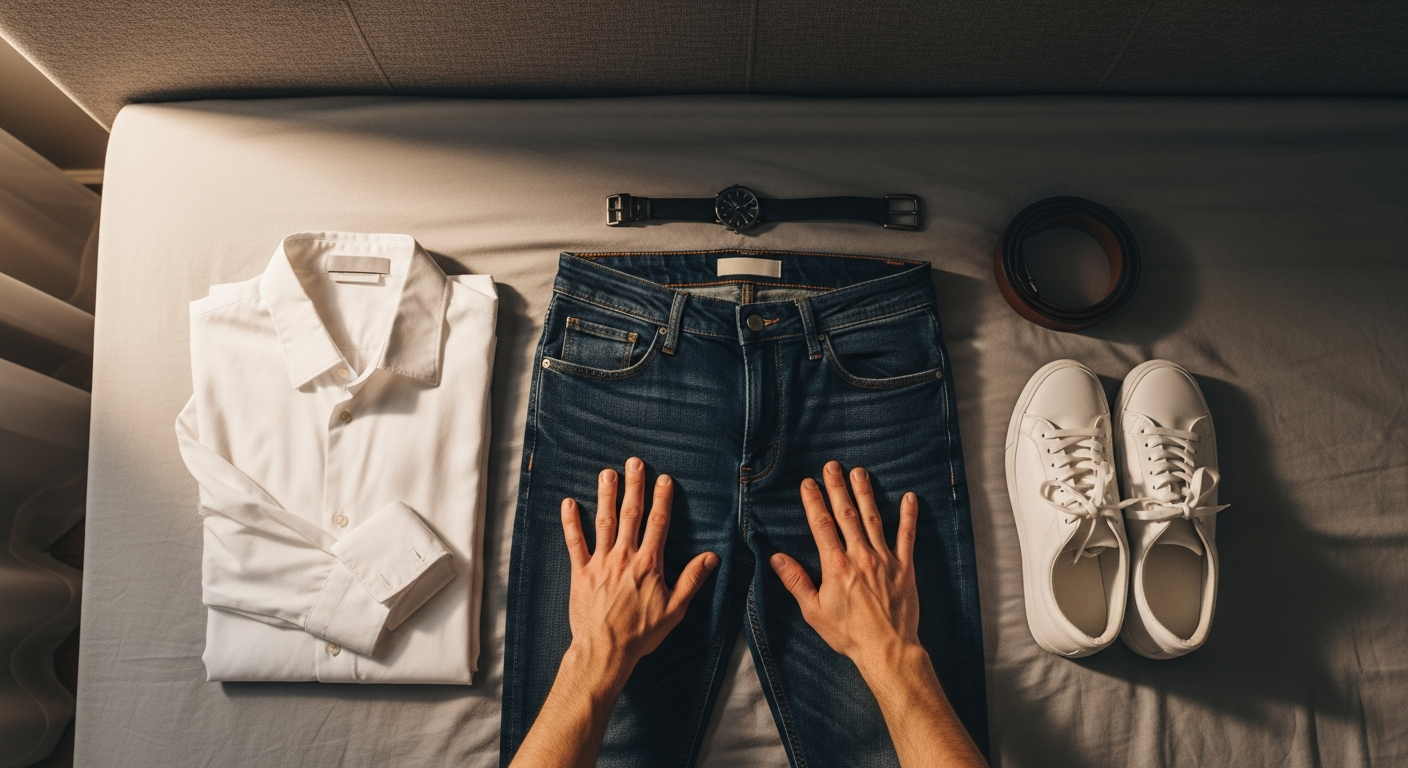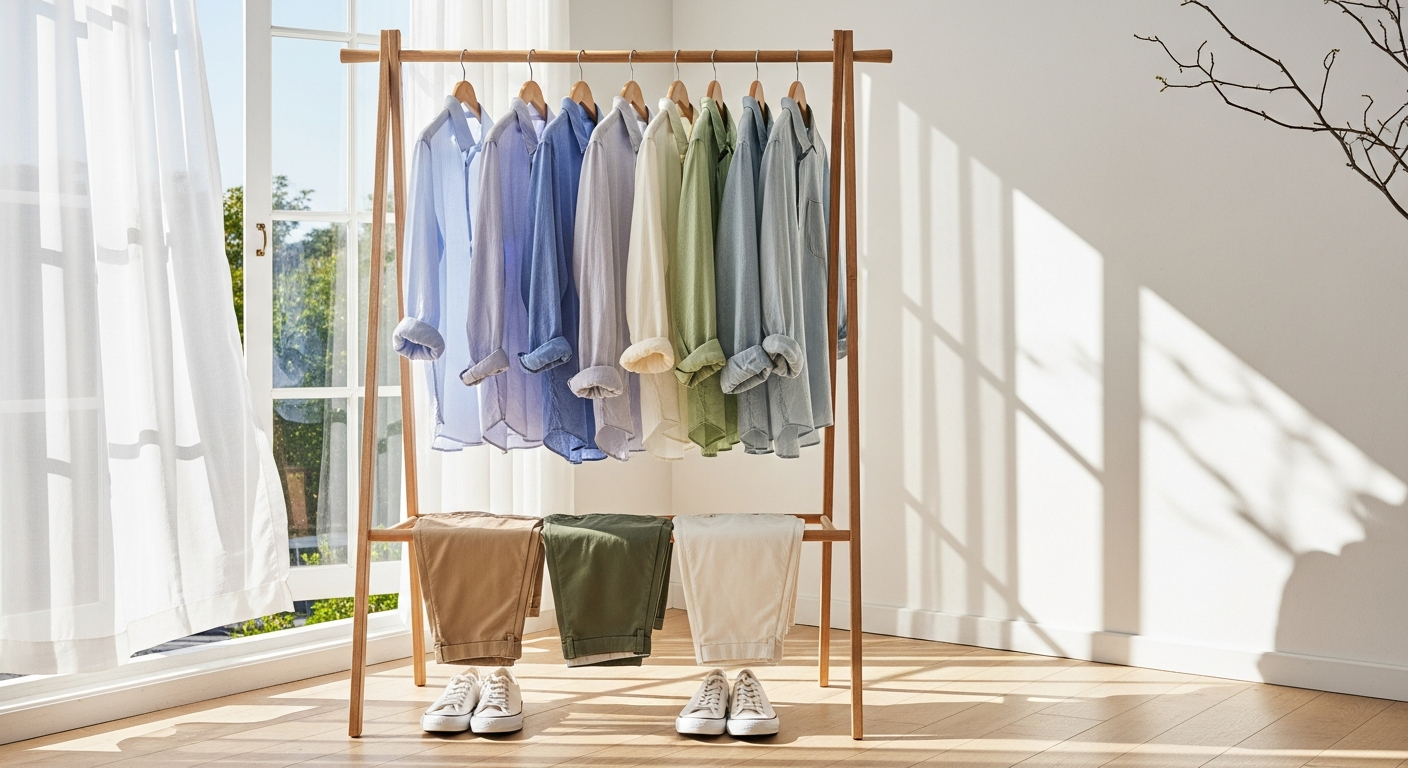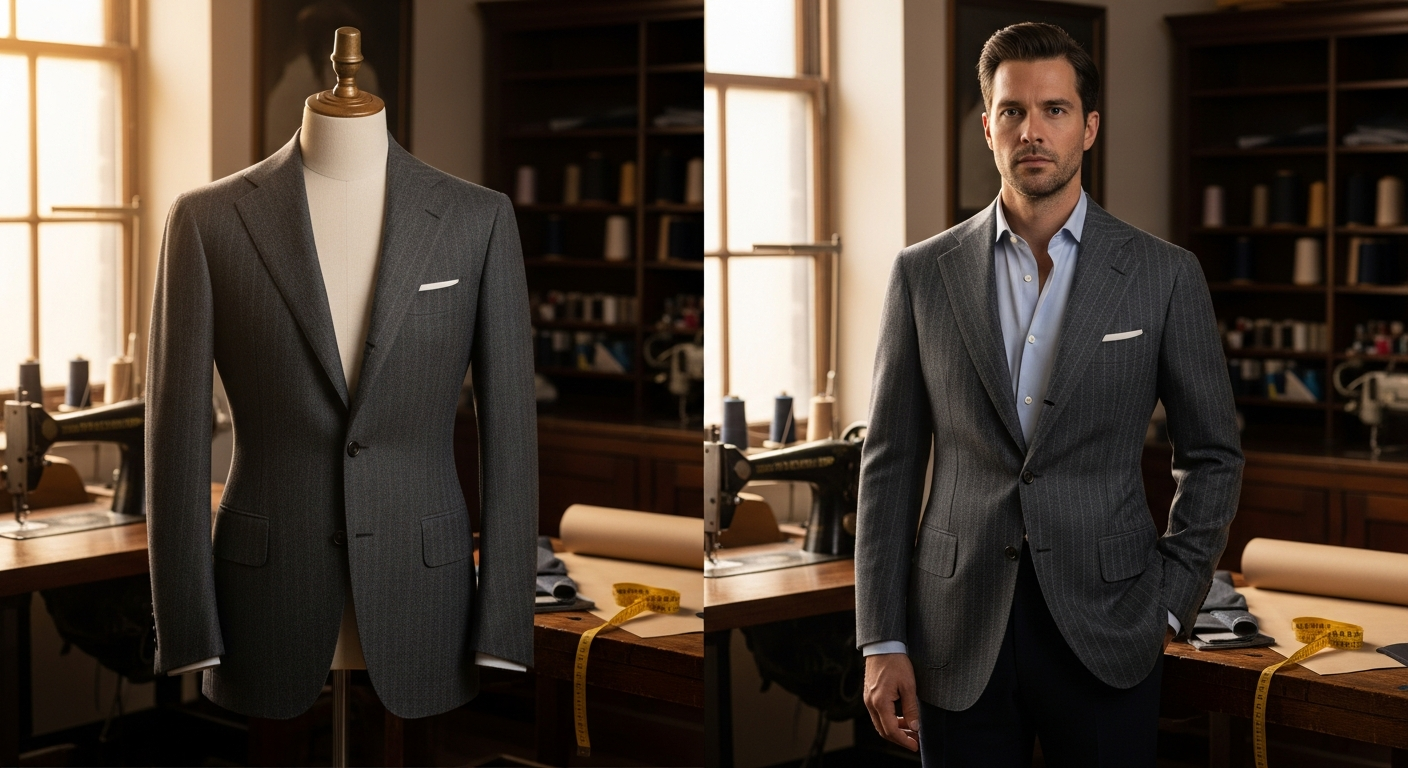
Fit is the single biggest factor in whether you look good. Not brand. Not price. Not color. Fit.
A $20 t-shirt that fits your body properly looks better than a $200 shirt that's too big. Every single time. That's not opinion. That's just how fabric works on a human frame.
Fit is something Grayne can't fix for you (yet). But understanding fit makes everything else work better.
The problem is that nobody teaches you what "good fit" actually means. You've been buying clothes your entire life based on a letter (S, M, L, XL) that means different things at every brand. So here's the guide you should have gotten a long time ago.
T-Shirts
Shoulders: The seam where the sleeve meets the body should sit right on your shoulder bone. Not drooping off the edge (too big) and not pulling up toward your neck (too small).
Chest: The fabric should lay flat against your chest without pulling at the buttons (if it has them) or billowing out at the sides. You should be able to pinch about an inch of excess fabric at your hip. More than that? Too big.
Length: The hem should end around mid-fly. You want it to cover your belt but not reach down to your thighs. If you raise your arms and your stomach shows, it's too short. If it looks like a nightgown, it's too long.
Sleeves: Should end roughly at mid-bicep. Not at your elbow (too long) and not at your shoulder (too short, or you're wearing a tank top).
Button-Down Shirts
Everything from t-shirts applies, plus:
Collar: When buttoned, you should be able to fit two fingers between the collar and your neck. One finger means it's too tight. Three means it's too loose.
Chest and torso: When buttoned, the fabric should lay smooth. If the buttons are pulling and creating little X-shaped gaps, the shirt is too tight. If the fabric is ballooning out and you could fit a pillow in there, it's too big.
Cuffs: If you're wearing the shirt with the sleeves down, the cuff should hit right at your wrist bone when your arms are at your sides. It should show about half an inch below a jacket sleeve.
Tucked vs. untucked: If you plan to tuck it, the shirt should be long enough to stay tucked when you sit down and raise your arms. If you plan to wear it untucked, the hem should end around mid-fly, like a t-shirt. Most guys own shirts that are too long to wear untucked but they do it anyway. If the shirt goes past your back pockets, tuck it or get it hemmed.
Pants and Jeans
Waist: The waistband should sit at your natural waist (or just below it, depending on the rise). You should be able to button them comfortably without sucking in, and without needing a belt to keep them up. A belt should be decorative, not structural.
Seat and thighs: Not skin-tight, not ballooning. You should be able to sit comfortably without feeling like the seams are about to pop. But there shouldn't be huge folds of excess fabric either.
Length (the break): This is where your pant leg meets your shoe. There are three options:
- Full break: The fabric folds once at the shoe. Traditional, conservative. Fine for dress pants.
- Half break: A slight fold. The most versatile. Works with everything.
- No break: The pant leg just barely touches the shoe. Modern, clean. Good with slim or tapered pants.
If your pants are pooling around your ankles like curtains, they're too long. A tailor can hem them for $10 to $15.
The slim vs. straight question: Neither is "right." Slim fits look modern and clean on thinner builds. Straight fits work better on athletic or larger builds. The key is that the leg should taper slightly from thigh to ankle. If your pants are the same width all the way down, they're probably too relaxed for most settings.
Blazers and Sport Coats
Shoulders: This is the most important fit point on a jacket, and the hardest for a tailor to fix. The shoulder seam should sit right at the edge of your shoulder. If it droops past your shoulder, the jacket is too big. If it creates a bump or dimple on your deltoid, it's too small.
Chest: Button the jacket (just the top button on a two-button). It should close smoothly without pulling. You should be able to fit a fist between the jacket and your chest, but not much more.
Length: The bottom of the jacket should roughly align with your knuckles when your arms hang at your sides. Another test: it should cover your seat (backside) but not extend much below it.
Sleeves: Jacket sleeves should show about half an inch of shirt cuff. If your shirt cuffs are hidden completely, the jacket sleeves are too long.
Want a free men's style guide?
We put together a 20-piece capsule wardrobe guide with every essential, why it works, and how to combine them into dozens of outfits. Yours free when you join the Grayne waitlist.
GET THE FREE GUIDEShorts
Length: The hem should hit above the knee. A 7-to-9-inch inseam works for most guys. If your shorts go past your kneecap, they're too long for current styles. If they're shorter than mid-thigh, that's a very specific look you need to own confidently.
Fit: Flat front, not pleated. The waist and thighs follow the same rules as pants. You should be able to move and sit comfortably.
The Tailor Secret
Tailoring is cheap. And it changes everything.
A tailor can:
- Hem pants ($10 to $15)
- Take in a shirt at the waist ($15 to $20)
- Shorten sleeves ($15 to $20)
- Taper pant legs ($15 to $20)
For $15, you can make a $40 pair of pants fit like they were made for you. That's the best return on investment in your entire wardrobe.
Find a local tailor (search "alterations near me"), bring in three or four items, and ask them to adjust the fit. Most places can turn things around in a week.
Fit by Body Type
General rules apply to everyone, but some adjustments help:
If you're lean/thin: Avoid overly slim fits. They can make you look smaller. A fitted (not tight) straight leg and well-fitting shoulders create structure.
If you're athletic/muscular: Look for shirts with more room in the chest and shoulders without excess in the waist. Athletic-fit options from brands like Bonobos and Levi's exist for this reason. Avoid slim-fit pants that are too tight in the thighs.
If you carry more weight: Properly fitted clothes look far better than oversized clothes on larger frames. Avoid the instinct to size up for comfort. Structured fabrics (oxford cloth, chinos, wool) hold their shape and drape better than thin knits that cling. Dark, solid colors create a cleaner line.
For everyone: The right fit for your body is the one where the fabric lays smoothly, nothing pulls or bunches, and you can move comfortably. It's that simple.
The Quick Fit Check
Next time you get dressed, stand in front of a mirror and check these five things:
- Shoulder seams sit on your shoulders (not drooping, not pinching)
- Nothing is pulling or creating gaps
- You can see your shoe without excess fabric pooling
- Your shirt hem is appropriate for tucked or untucked
- You can move your arms, sit down, and bend without restriction
If all five pass, the fit is good. If any fail, a $15 trip to the tailor fixes it.
Fit isn't about body type. It's about whether your clothes were made for your specific body. Off the rack, they rarely are. But a few small adjustments close the gap completely.
For outfit ideas built around clothes that actually fit, check the outfit building guide or let Grayne show you what works from your own closet.